
Robot software development
Robots do what somebody wrote.
We write custom behaviour for humanoid robots: motion sequences, voice, remote control, show cues and integrations with your own systems. Python and C++ on ROS 2 and the Unitree SDK, built in Monaco and delivered as code you keep.
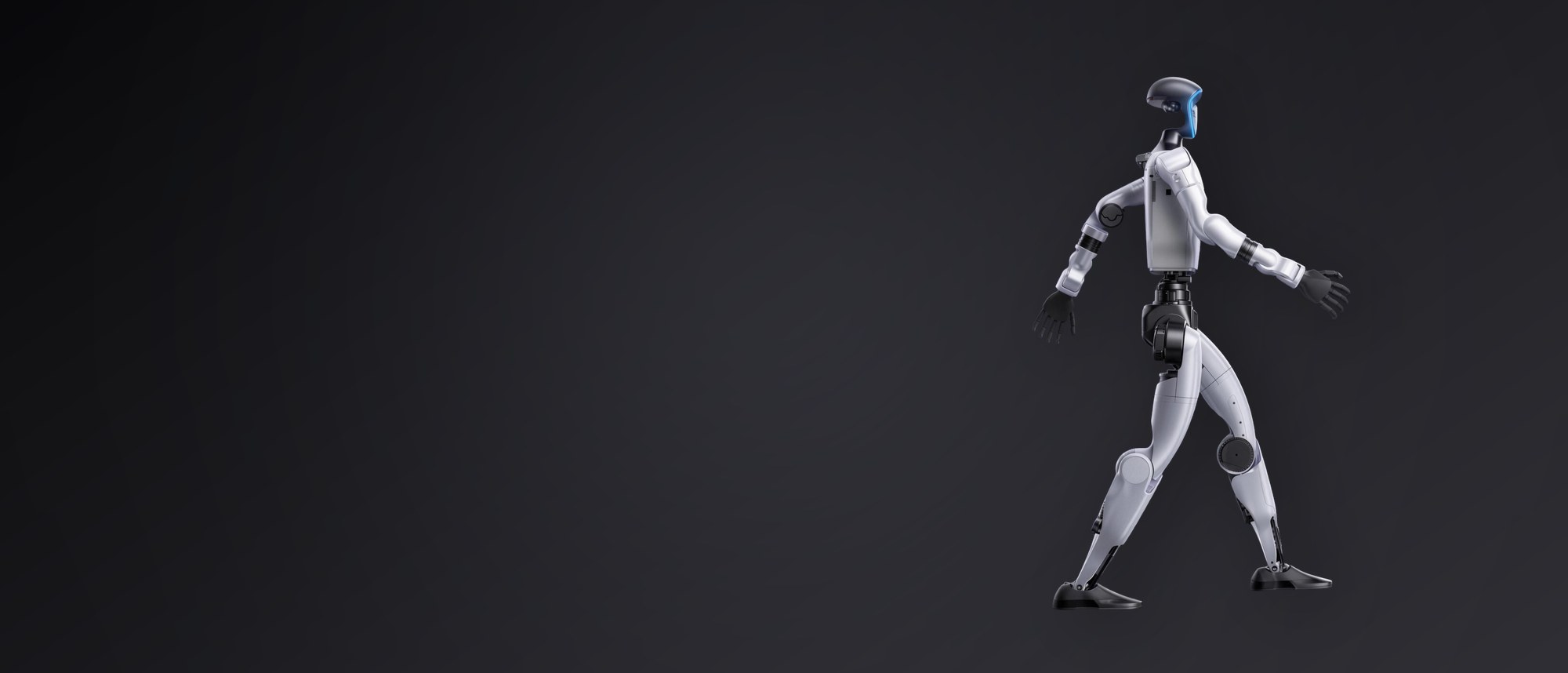
Off the shelf, a robot has a repertoire. Written for you, it has a job.
Every humanoid robot arrives with a set of built-in moves. They are enough to impress a room once. They are not enough when the robot has to demonstrate your product, hit a cue from the lighting desk, read from your database or repeat the same twelve seconds perfectly for three days on a stand. That is where robot software development starts.
We work on the Unitree G1 EDU, the developer version of the humanoid we hire out as NOVA, with the full SDK open. Our engineers write in Python and C++ on top of ROS 2. That means motion sequences, speech, sensor handling, remote control and connections to whatever you already run, from a product catalogue to a show control desk.
Projects are quoted per project, never by a rate card on a web page, because the honest price depends on what the robot has to do and how exact it has to be. Small jobs are a few days of work on a robot you are already hiring. Larger ones run for weeks, with a demonstration at the end of each one so you can see the thing move rather than read a report.
What we build.
Custom motion
Sequences, gestures and routines written for your scenario, tuned on the real robot rather than only in simulation.
Voice and speech
Scripted lines or generated speech in English and French, with the pacing, pauses and gestures matched to the words.
Remote control
An operator interface built for your show: a tablet, a handheld controller or a single button that a stage manager can press.
Show control
Cues taken from timecode, a lighting desk or a media server, so the robot moves with the music and the lights instead of near them.
Integrations
Your API, product database, CRM, booking system, screens or sensors. The robot reads real data and acts on it.
ROS 2 and the SDK
Python and C++ on ROS 2 and the Unitree SDK, version controlled and documented, so another engineer can pick it up later.

What a project includes.
Every engagement is scoped in writing before anyone opens an editor, so you know what you are buying.
- A written brief and a technical scope agreed with you before development begins
- Development on real hardware, not only in simulation
- Source code in your repository, in Python and C++ on ROS 2
- Documentation an engineer outside our team can follow
- A rehearsal or dry run on the robot before the first public use
- An operator trained on the behaviour we wrote, for the days you hire the robot
- A support window after handover for fixes and small adjustments
- A fixed quotation per project, with travel and hire days listed separately
How a project runs.
Scope
We talk through what the robot must do, where it must do it and how exact it has to be. You get a written scope and a fixed price.
Build
Our engineers write the behaviour on the real robot, in short cycles, with a video at the end of each one so you see progress instead of reading about it.
Rehearse
We run the whole sequence in conditions as close to the real venue as we can get, then fix what the floor, the light and the noise expose.
Hand over
You get the code, the documentation and a trained operator. If you want us on site, we bring the robot and run it for you.
Questions we get asked.
Anything we have not covered? Write to us and we answer within 24 hours.
How much does robot software development cost?
It is quoted per project. The price depends on how much new behaviour has to be written, how precise the timing must be and how many systems the robot has to talk to. Describe what you want the robot to do and we come back within 24 hours with a scope and a fixed figure.
Which robots do you develop for?
The Unitree G1 EDU humanoid above all, which we operate as NOVA, because it opens the full software development kit. The work carries across to MONTARI, the standard G1, wherever the platform allows it. If you own a different robot with an accessible SDK, send us the model and we will tell you honestly whether we are the right team.
Do we own the code you write?
Yes. The source lands in your repository, in Python and C++ on ROS 2, with documentation another engineer can follow. We do not hold your show hostage in a black box, and we are happy for your own developers to work alongside ours.
How long does a robot software project take?
A tightened motion sequence or a scripted scene for one event is usually a few days. A demonstration tied to your own data, with show control and a rehearsal, runs two to six weeks. We say which one you are looking at before you commit, not after.
Can you write the software and run the robot at our event?
That is the usual arrangement. We develop the behaviour, then hire you the robot with an operator who already knows the script. One team wrote it and one team runs it, so nothing is lost between the two.
Tell us what the room should remember.
Send us the date, the venue and what you want people talking about afterwards. We answer within 24 hours with a plan and a price.